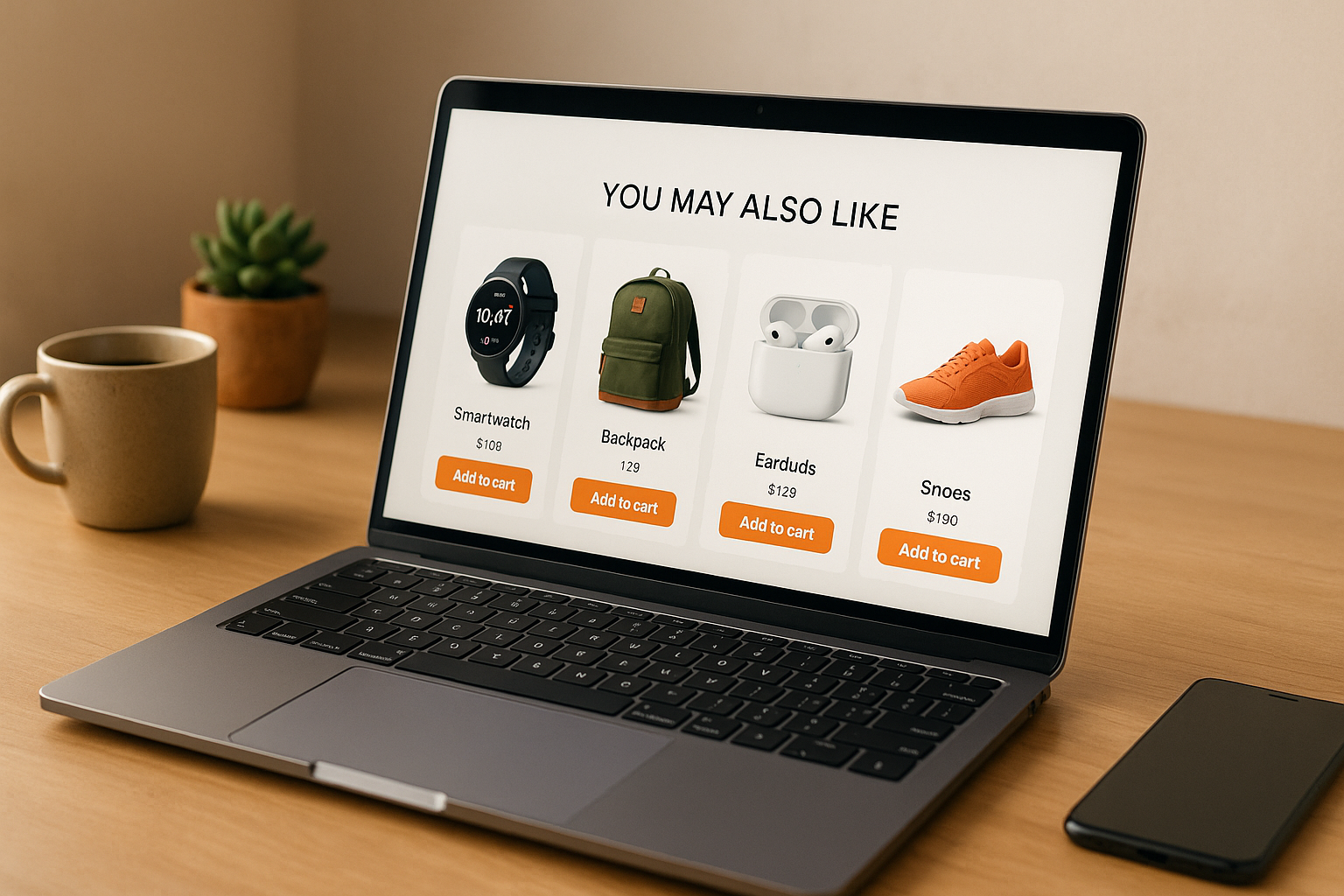
Cross-selling just got smarter with ChatGPT. By using customer data, browsing habits, and product connections in real time, ChatGPT delivers personalized product recommendations that feel natural and relevant. Here's why it works:
- Dynamic Suggestions: Custom recommendations based on browsing history and past purchases.
- Real Conversations: Engages customers with tailored questions and helpful suggestions.
- Smart Bundling: Automatically creates bundles that make sense (e.g., phone + case + earbuds).
Traditional cross-selling methods often fail due to rigid rules and manual processes. ChatGPT solves these problems by offering real-time insights, natural language understanding, and efficient automation, helping businesses increase revenue and improve customer experiences. Ready to learn how it works? Let’s dive in.
10 Ways to Use ChatGPT for an eCommerce Store

Cross-Selling Fundamentals
Cross-selling is a powerful way to increase revenue by suggesting complementary products that encourage customers to add more to their carts.
Cross-Selling Results
When done right, cross-selling can lead to revenue increases of 10–30% across various online retail industries. Two key metrics help measure its success:
- Average Order Value (AOV): By promoting bundles or related add-ons, cross-selling directly boosts the total value of each purchase.
- Customer Lifetime Value (CLV): Offering relevant product suggestions fosters stronger relationships with customers, encouraging repeat purchases and long-term loyalty.
Current Cross-Selling Challenges
Despite its potential, traditional cross-selling methods often fall short due to several limitations:
-
Rule-Based Systems:
These systems rely on rigid rules that don't adapt to changing customer behaviors. They also struggle to understand context or update outdated product pairings. -
Manual Processes:
Mapping products manually is time-consuming, prone to errors, and difficult to scale effectively.
The core issue is delivering personalized, timely recommendations while keeping operations efficient. Many basic systems lack the ability to analyze real-time customer behavior or keep up with shifting trends.
This is where ChatGPT steps in, offering advanced tools to address these challenges with personalized, dynamic recommendations. Up next, we'll dive into how ChatGPT's features transform cross-selling strategies.
ChatGPT Cross-Selling Features
ChatGPT leverages advanced natural language processing (NLP) to analyze product details and engage with customers in real time. Its ability to identify complementary products and provide contextual suggestions addresses common cross-selling challenges. These features work together to create timely and personalized interactions, streamlining the cross-selling process.
Smart Product Recommendations
ChatGPT uses customer history and product details to pinpoint items that go hand in hand with what a shopper is browsing. For instance, if someone is looking at a smartphone, ChatGPT might suggest a protective case or wireless earbuds that pair well with the device.
But it doesn’t stop at just listing suggestions. ChatGPT engages in meaningful conversations, guiding customers toward the most relevant options.
Live Customer Conversations
With its conversational skills, ChatGPT can ask targeted questions about a shopper's needs and recommend complementary items during the buying process. For example, if a customer adds a DSLR camera to their cart, ChatGPT might say, “Would you like to check out compatible lenses or a camera bag to complete your setup?”
This interactive approach enhances the shopping experience while subtly introducing additional products.
Product Bundle Creation
ChatGPT also excels at creating product bundles by identifying natural connections between items. By analyzing purchase patterns, it suggests groupings that make sense and add value. For example, if a customer selects a gaming console, ChatGPT might recommend a bundle that includes an extra controller, popular game titles, and a carrying case, offering a convenient package tailored to the shopper’s interests.
sbb-itb-5ab00cc
ChatGPT Setup Guide
Follow these steps to integrate ChatGPT's cross-selling features effectively.
Product Data Setup
Start by organizing your product catalog with these key elements:
- Product Relationships: Clearly define connections between items that complement each other.
- Product Attributes: Include detailed specifications, features, and potential use cases.
- Pricing Tiers: Establish price ranges to guide related product suggestions.
- Inventory Status: Sync live stock levels to ensure accurate recommendations.
Develop a standardized product data structure that combines technical details with natural language descriptions. This dual format allows ChatGPT to better understand product relationships and communicate them clearly to customers.
Once your product data is ready, configure cross-sell alerts triggered by customer actions.
Cross-Sell Alert Setup
To recommend complementary products automatically, set up triggers based on customer behavior:
1. Shopping Cart Analysis
Monitor what customers add to their carts and tailor suggestions accordingly. For instance, if a customer adds a digital camera, ChatGPT can recommend memory cards, camera bags, or compatible lenses based on the specific model.
2. Browse Pattern Recognition
Use browsing data to understand customer interests. Focus on factors like:
- Time spent on product pages.
- Connections between categories viewed.
- Price ranges of items explored.
3. Customer Segment Rules
Customize cross-selling strategies for different customer groups:
- First-time buyers: Highlight essential add-ons or starter kits.
- Returning customers: Suggest upgrades or related items based on past purchases.
- High-value shoppers: Offer premium or exclusive product options.
- Category-specific browsers: Recommend items tied to their browsing category.
After setting up these triggers, integrate them with your platform.
Platform Connection Steps
Implement the following technical steps to connect ChatGPT to your system:
-
API Configuration
- Set up secure API endpoints.
- Implement authentication protocols.
- Define data transfer parameters to ensure smooth communication.
-
Database Integration
- Create mapping tables for product relationships.
- Enable real-time inventory synchronization.
- Configure access points for customer data.
-
Testing Protocol
- Verify the accuracy of data flow.
- Test response times to ensure quick suggestions.
- Evaluate the relevance of product recommendations.
Finally, use monitoring tools to track performance and adjust settings as needed. Regular testing helps maintain accurate and timely cross-selling suggestions.
| Integration Component | Setup Priority | Update Frequency |
|---|---|---|
| Product Data Schema | High | Weekly |
| Cross-Sell Rules | Medium | Monthly |
| API Connections | High | Quarterly |
| Performance Monitoring | Medium | Daily |
Results Tracking and Updates
Keep a close eye on your ChatGPT cross-selling performance to ensure your strategies are delivering results.
Performance Metrics
Here are the key metrics you should monitor:
Core Metrics Dashboard
| Metric | Description |
|---|---|
| Attachment Rate | Percentage of orders that include at least one cross-sell item. |
| Conversion Rate | Percentage of cross-sell offers that customers accept. |
| Revenue Per Session | Average revenue generated from each customer visit. |
| Average Order Value | Total order value, including cross-sell items, divided by the number of orders. |
These metrics not only help you measure success but also provide insights for refining your approach.
Testing Different Approaches
Tracking metrics is just the beginning - testing new strategies is essential for continuous improvement.
Conversation Flow Testing
Experiment with how you present cross-sell suggestions. For instance, you can directly recommend items based on a customer’s specific product (e.g., suggesting a phone case for their new phone) or take a more personalized approach by asking about their lifestyle or needs (e.g., preferences for durability or style). Segment your audience and test both methods to see what resonates best.
Timing Optimization
The timing of your cross-sell offers can make or break their effectiveness. Test different touchpoints, such as:
- During product browsing
- At the cart review stage
- Post-purchase follow-ups
- Abandoned cart recovery emails
For example, a beauty retailer discovered that offering skincare bundles during the cart review stage led to a 20% higher conversion rate compared to showcasing them on product pages.
Regular Updates
To keep your cross-selling system performing at its best, update it on a regular schedule:
Weekly Updates
- Adjust inventory and pricing to reflect the latest stock.
- Update promotional offers to stay competitive.
- Review and refresh top-performing product pairings.
Monthly Reviews
- Analyze customer feedback to fine-tune recommendation algorithms.
- Update seasonal product relationships to align with trends.
- Remove discontinued products to avoid customer frustration.
Quarterly Optimization
- Dive into broader trends to refine bundling strategies.
- Revise conversation scripts for better engagement.
- Introduce new product categories to keep offerings fresh.
Make sure to document all changes and track their impact to understand what’s working and where there’s room for improvement.
Conclusion
ChatGPT has redefined how e-commerce businesses approach cross-selling by turning static suggestions into dynamic, tailored interactions. Its natural language abilities enable deeper connections with customers, offering relevant product recommendations that not only enhance the shopping experience but also improve sales performance. By analyzing customer data and behavior, it helps increase both conversion rates and average order values - all while ensuring a seamless and non-intrusive shopping journey.
With tools like natural language processing, real-time inventory tracking, and predictive analytics, businesses of any size can now achieve a level of personalization that was once out of reach. As AI technology advances, we can expect even more refined cross-selling solutions to emerge, benefiting both small businesses and large-scale retailers alike.
Use the strategies and techniques shared in this guide to refine your cross-selling efforts and achieve tangible growth in your e-commerce operations.
FAQs
ChatGPT can assist e-commerce businesses in crafting personalized cross-selling strategies by diving into customer data to deliver tailored product suggestions. By examining factors like purchase history, browsing habits, and individual preferences, it can recommend products that genuinely complement what a customer is already interested in.
This approach not only makes shopping more convenient for customers but also helps businesses increase their average order value and strengthen customer loyalty. For instance, if someone purchases a smartphone, ChatGPT might suggest useful add-ons like phone cases or screen protectors, making the buying process smoother while boosting sales.
Traditional cross-selling approaches often fall short because they tend to be overly generic, offering product recommendations that miss the mark for many customers. These methods frequently depend on outdated algorithms or manual processes, which can make scaling and delivering personalized experiences a real challenge.
ChatGPT tackles these issues by leveraging AI-powered insights to craft recommendations that are tailored to each customer. By analyzing factors like browsing habits, purchase history, and individual preferences, it enables e-commerce platforms to suggest products that actually resonate with shoppers. The result? A more natural shopping experience that boosts customer satisfaction and opens the door to increased sales.
Businesses can gauge how effective ChatGPT's cross-selling strategies are by keeping an eye on key performance indicators (KPIs) like conversion rates, average order value (AOV), and customer retention rates. These metrics provide insights into whether the recommendations are boosting sales and improving customer satisfaction.
Another useful approach is A/B testing, which allows companies to compare ChatGPT-generated cross-selling suggestions with their current strategies. By examining customer behavior, purchase trends, and revenue changes, businesses can fine-tune their methods to ensure the AI-driven recommendations align with their objectives.